
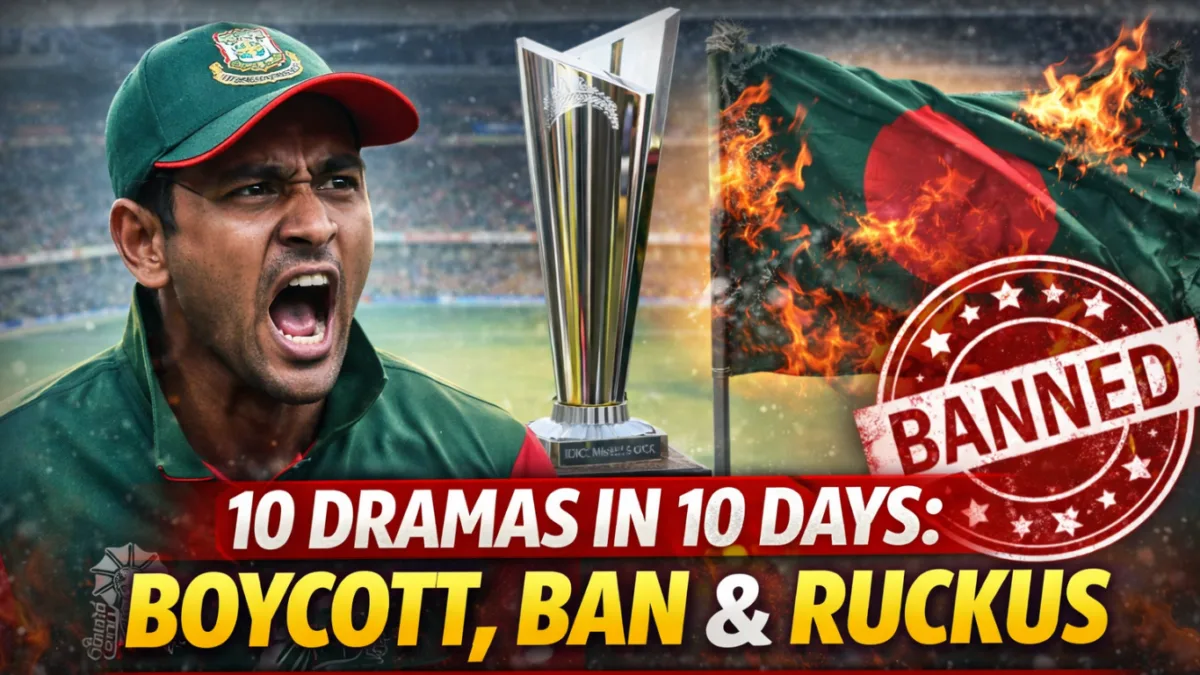
In the run-up to the T20 World Cup 2026, a swirling World Cup Controversy involving Bangladesh has grabbed global cricket headlines. Over the span of just ten days, what began as an IPL contract dispute has snowballed into a diplomatic and sporting crisis, with Bangladesh’s cricket board repeatedly escalating the situation and raising questions over security, participation, and match venues ahead of the February tournament.
Also Read: Virat Kohli Untold Story of the Century: 7 Runs That Broke Millions of Hearts
From IPL Tension to World Cup Controversy
The chain of events that ignited the World Cup Controversy began in mid-December 2025, during the IPL auction in Abu Dhabi. Bangladesh fast bowler Mustafizur Rahman was picked by the Kolkata Knight Riders (KKR) for the upcoming IPL season. The move invited controversy amid rising political tensions between India and Bangladesh following reports of communal violence in Bangladesh, which spilled into heated reactions on social media.
However, the situation escalated dramatically when, on January 3, 2026, the BCCI reportedly instructed KKR to release Mustafizur Rahman, effectively ending his IPL contract before the season began. The decision triggered fury within Bangladesh cricket circles and among fans, deepening resentment and amplifying calls for action from the Bangladesh Cricket Board (BCB).
Safety Concerns and Venue Relocation Demands
In the wake of Mustafizur’s release, the World Cup Controversy entered a new phase. On January 5, 2026, the BCB convened an emergency meeting and wrote to the International Cricket Council (ICC) demanding that its World Cup matches scheduled in India — specifically in Kolkata and Mumbai — be relocated due to alleged “security concerns.”
Bangladesh cited player safety as the main reason behind seeking the relocation, stating it was responding to guidance “from the government of Bangladesh.” The board officially informed the ICC that it would not travel to India to play its scheduled matches unless conditions changed. This marked a dramatic escalation from a contractual issue to outright refusal to participate on Indian soil.
Bans, Boycotts and Broadcast Blocks
The situation quickly deteriorated into a series of dramatic actions across multiple fronts, fitting of the term World Cup Controversy. Among the key moves in the first ten days:
-
Broadcast Ban: The BCB imposed a ban on the broadcasting of the IPL in Bangladesh, a move seen as a retaliatory step that directly affected cricket fans and commercial interests.
-
Public Statements: BCB officials and Bangladesh government advisors made a series of high-profile public comments criticizing the ICC and BCCI, with some alleging that the World Cup’s schedule and organization did not adequately address their security fears.
-
Diplomatic Messaging: Bangladesh’s sports advisers made claims — later walked back by the BCB — suggesting the ICC had agreed to venue changes. The board later clarified no official confirmation had been received from the ICC.
-
Calls to Shift Matches Abroad: At one point, Bangladesh even explored options including relocating matches to Sri Lanka or Pakistan, adding another layer to the brewing World Cup Controversy.
-
International Offers: Reports surfaced that Pakistan had offered to host Bangladesh’s scheduled World Cup matches, further politicizing the dispute.
ICC’s Stance and Rejecting Safety Claims
The ICC has remained firm throughout most of the exchanges. According to security assessments shared by the cricket body, there was no substantial evidence of an elevated threat level that would justify removing matches from India. ICC officials reiterated that the World Cup schedule was already finalized and that teams were expected to participate as planned.
Despite this, the BCB renewed its position in formal discussions, asserting that the safety of its players was paramount and reaffirming its request for venue changes in a press statement.
Bangladesh’s Position and the Ongoing Debate
As the World Cup Controversy simmers, Bangladesh’s captain Najmul Hossain recently spoke out about the mental strain the issue has placed on players, describing how the team is trying to project confidence even though the situation is “not okay.”
With the ICC steadfast on maintaining the original venues and Bangladesh publicly maintaining its objections, the standoff remains unresolved just weeks before the T20 World Cup’s February 7 start. The controversy has not only become a sporting issue but has also intertwined with wider diplomatic and media narratives between the two neighboring countries.
What Lies Ahead
As officials from the ICC and the Bangladesh Cricket Board continue discussions, the cricket world watches closely. The next steps could involve high-level talks, possible concessions on security arrangements, or even ground-level assurances from host bodies — all of which will shape whether Bangladesh participates fully in the T20 World Cup or escalates its boycott. With tensions still high, this World Cup Controversy is far from over and may yet define the narrative of the 2026 tournament.