
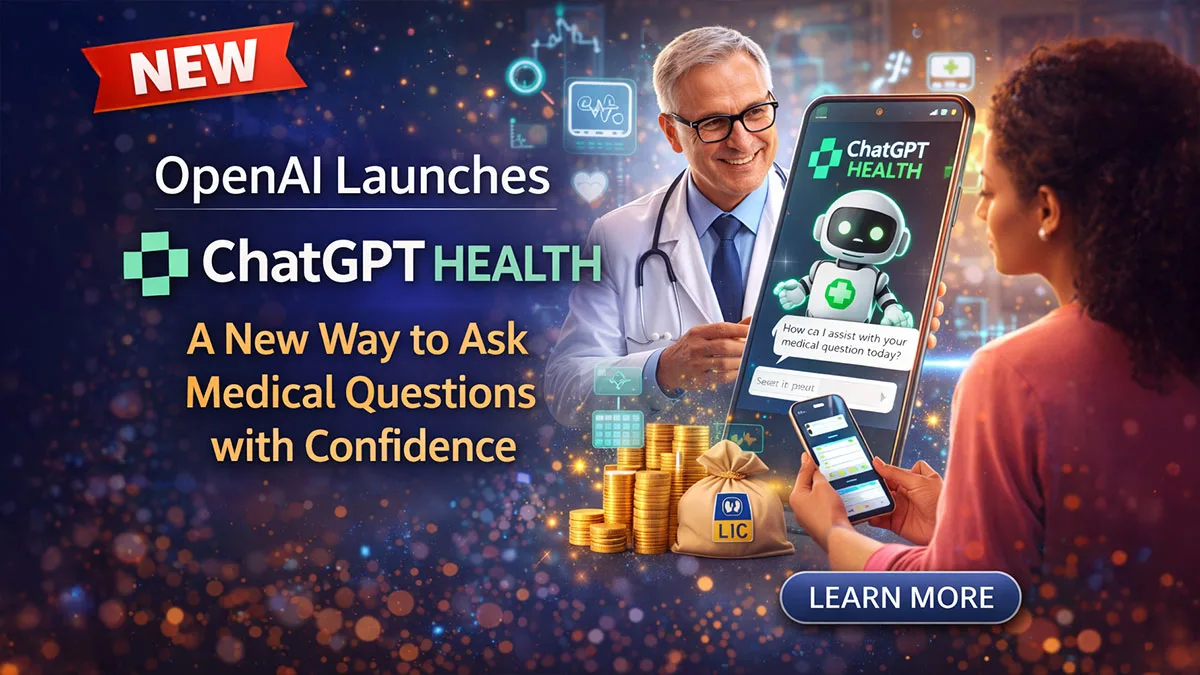
OpenAI Launches ChatGPT Health: OpenAI has officially launched ChatGPT Health, a new dedicated medical experience within ChatGPT designed to help people ask health-related questions in a safer and more personalized way than ever before. This major update aims to combine AI’s ability to explain complex topics in simple terms with user-controlled health data such as medical records and wellness apps — all while prioritizing privacy and security.
Health and wellness questions have long been among the most common topics people ask ChatGPT about. OpenAI reports that over 230 million health-related questions are asked on the platform every week — a number that demonstrates how much people around the world already rely on AI to understand symptoms, test results, treatments, insurance options, and much more.
But until now, these conversations were mixed in with everyday chats about travel, work, news, and other topics. ChatGPT Health creates a dedicated space where users can focus solely on health and wellness — without their personal health context spilling into other areas, and without other chats influencing medical responses.
Read also: Suffering From Dry Lips in Winter? Don’t Ignore It—Say Goodbye to Cracks with These Home Remedies
OpenAI Launches ChatGPT Health: What Makes ChatGPT Health Different?
Unlike general AI chats, ChatGPT Health is designed as a specialized space for health-related questions. Here’s how it’s different:
OpenAI Launches ChatGPT Health: Personalized Answers Using Your Data
Users can choose to connect medical records and wellness apps such as Apple Health, Function, MyFitnessPal, Peloton, and others. When connected, ChatGPT can tailor its responses by taking into account information from these sources — such as lab results, activity data, diet logs, and more.
OpenAI Launches ChatGPT Health: Business Standard
This means that instead of generic advice, users can receive answers that are more relevant to their specific health situation. For example:
- Explaining your lab test results in everyday language
- Helping you prepare a list of questions before your doctor’s appointment
- Guiding you in managing your diet or fitness based on your tracked data
- Comparing health insurance options based on your healthcare patterns
Built with Privacy and Control
OpenAI emphasizes that privacy and security are paramount for ChatGPT Health. Conversations within this dedicated space are separate from regular chats, stored securely, and not used to train future AI models. Users also have the right to view or delete their saved health data at any time. While ChatGPT Health uses context from non-health conversations to make responses more helpful, health data never flows back into regular chats, ensuring sensitive information remains within the secure health space.
Designed with Doctors
To make health conversations safer and more reliable, OpenAI collaborated with over 260 doctors from nearly 60 countries. These medical professionals helped determine how the AI would respond, including when it should suggest consulting a clinician or explain medical terms without oversimplifying them.
While ChatGPT Health can explain complex medical information in simpler terms, OpenAI clearly states that it is not a diagnostic tool and should not replace professional medical advice or treatment. This distinction is crucial, especially given how commonly people seek health guidance online.
Read also: US tariffs on India Hits New – What It Means for Trade and Markets
Secure and User-Centered by Design
ChatGPT Health also includes robust security features such as:
- Enhanced encryption and isolation of health data and conversations
- Separate memory and files that are not mixed with regular chats
- User-controlled integration and disconnection of apps and records
- The ability to delete chat history and data at any time
These measures address growing concerns about how health data is stored, used, or shared online.
Who can use ChatGPT Health?
Currently, access to ChatGPT Health is being rolled out gradually. It is available in many regions via a waitlist for users with ChatGPT Free, Go, Plus, and Pro plans — though availability varies by country and device. For example, medical record connections are currently limited to users in the United States, with broader access and additional features expected later.
OpenAI plans to expand access on web and iOS platforms, with Android support coming soon.
What this means for users worldwide
The launch of ChatGPT Health is a significant step in how people around the world interact with AI for medical questions. By combining advanced AI with user-controlled health data and robust privacy protections, this tool can help millions of people better understand their bodies, prepare for clinical appointments, and make more informed decisions about lifestyle and wellness — all in language that is easy to understand and relevant globally.
However, this also serves as a reminder that even the most advanced AI should support professional medical care, not replace it. OpenAI’s emphasis on collaboration with doctors and data privacy underscores a cautious yet promising future for AI-assisted health guidance.
Read also: World-Class Elegance Meets Power: Motorola Unveils the All-New Motorola Signature