
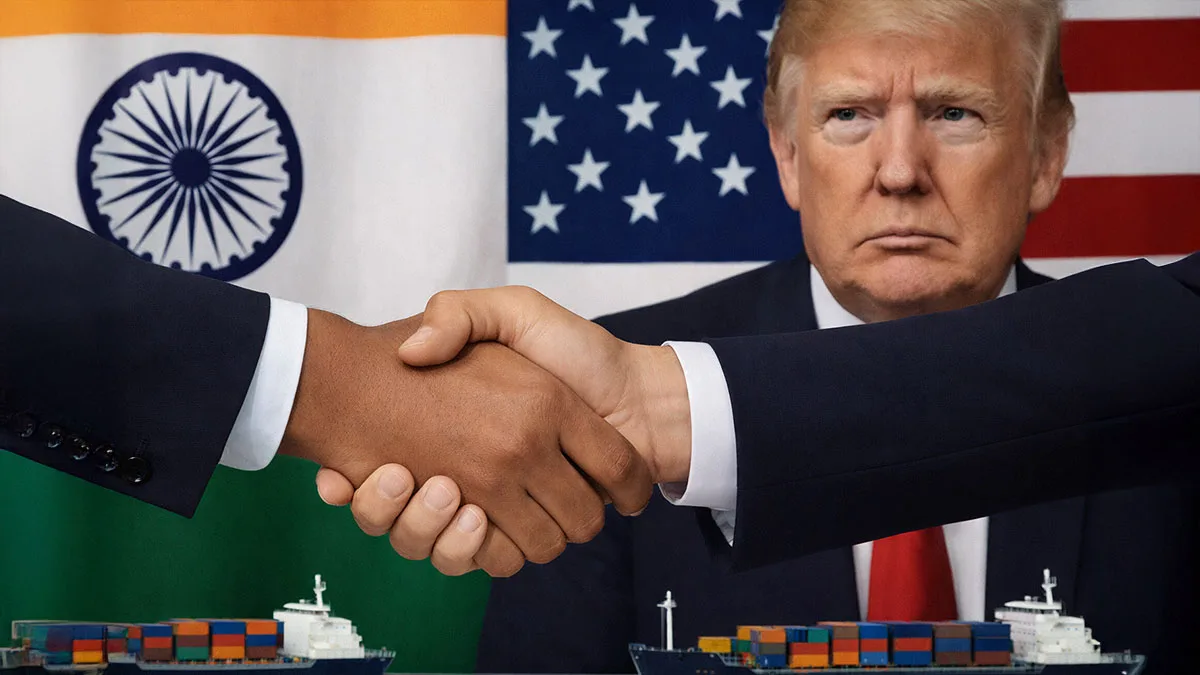
US Tariffs on India: Amidst a new surge in trade tensions, US tariffs on India remain in the spotlight, as Washington imposes hefty duties on Indian exports, sending ripples through global markets and business circles. Here’s what you need to know—explained simply and clearly.
The United States has imposed significantly high tariffs on Indian goods—currently around 50% on several products—as part of broader trade actions linked to geopolitical disputes and the US attempt to rectify trade imbalances. These duties involve multiple tariff components and affect a substantial portion of India’s export basket.
The situation has been further exacerbated by the Trump administration’s recent endorsement of new legislation that could impose tariffs of up to 500% on countries, including India, that continue certain energy imports.
US Tariffs on India: Why does this matter?
US tariffs on India is not just theoretical—they have real-world business and market implications:
- Stock markets have fallen, with Indian indices declining on fears of reduced trade and earnings.
- Share prices of export-oriented companies, such as textile and seafood producers, have dropped under the pressure of the potential tariff impact.
- Key sectors like leather, gems, jewelry, and others are facing challenges in Parliament and industry forums due to the competitive disadvantages caused by the tariffs.
Read also: Suffering From Dry Lips in Winter? Don’t Ignore It—Say Goodbye to Cracks with These Home Remedies
Who will be most affected?
While exemptions exist for strategic sectors like pharmaceuticals and semiconductors, the US tariffs on India disproportionately affect labor-intensive and traditional export sectors—textiles, gems, leather products, and parts—which together constitute a significant portion of goods destined for the US market.
The result? Many exporters are worried about losing orders, especially without a clear trade agreement in place.
Why is the US doing this? US officials argue that these tariffs—part of a broader trade strategy—address perceived trade imbalances and discourage reliance on strategic competitors. Some recent legislation links tariff levels to issues such as energy purchases from certain countries.
Meanwhile, prominent voices in the US Congress have introduced measures to eliminate or reduce punitive duties, citing their detrimental effects on global cooperation—suggesting the debate is far from over.
Could this situation change?
US tariffs on India are not necessarily permanent. Trade negotiations and political developments in both countries could lead to changes or reductions in tariffs—a prospect many Indian exporters are watching closely. In simple terms:
Think of US tariffs on India as a significant tax on Indian goods entering the US:
- This makes Indian goods more expensive in the US.
- This can reduce demand for Indian products abroad.
- This puts pressure on businesses, workers, and even the stock market in India.
What happens next?
Lawmakers in both countries are debating trade policy, and potential solutions are being explored, so the situation is still evolving. But for now, Indian businesses are navigating one of the most challenging tariff environments in decades—and the global economy is watching closely.
Read also: World-Class Elegance Meets Power: Motorola Unveils the All-New Motorola Signature