
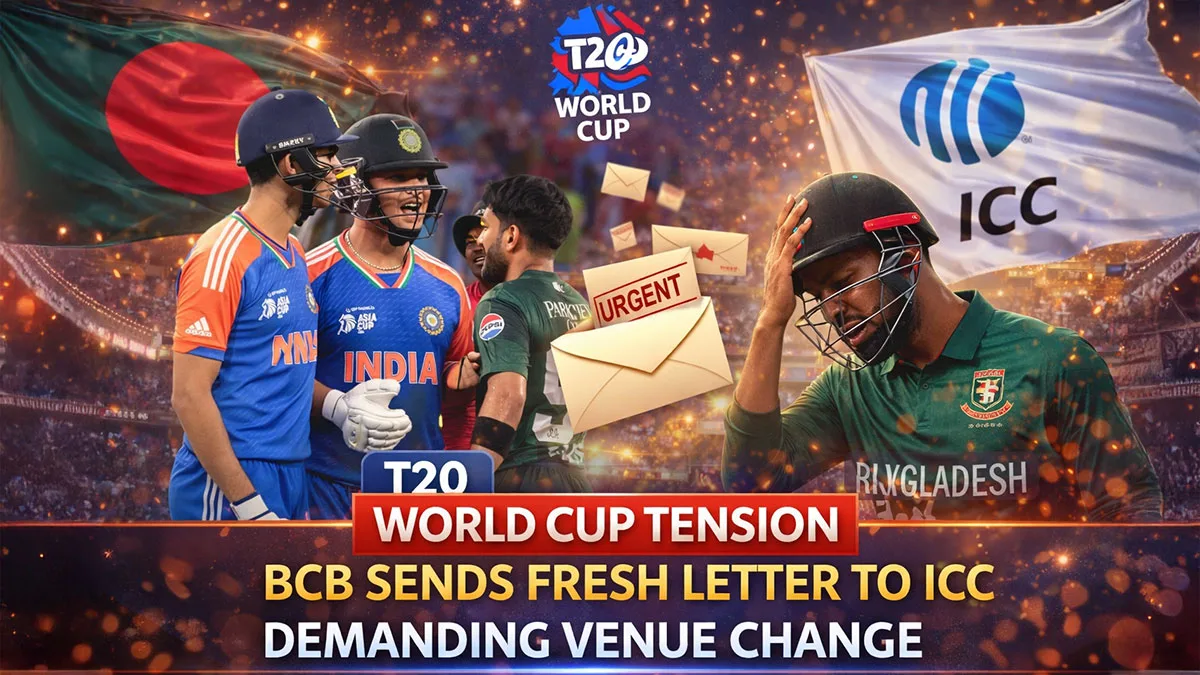
T20 World Cup Tension: In a significant development on the eve of the 2026 ICC Men’s T20 World Cup, the Bangladesh Cricket Board (BCB) has sent another formal letter to the International Cricket Council (ICC) requesting a change of venue for its scheduled matches in India. This is the second such letter in recent days, as security concerns and diplomatic tensions persist regarding Bangladesh’s participation in the global event. The 2026 T20 World Cup, scheduled to begin on February 7, will be co-hosted by India and Sri Lanka.
T20 World Cup Tension: Why is the BCB requesting a change of venue?
According to the latest letter from the BCB, the board reiterated its position that Bangladesh’s T20 World Cup matches should be played outside of India, preferably in Sri Lanka, due to security concerns and heightened tensions between Bangladesh and India. This request follows the diplomatic controversy that erupted after the controversial release of Bangladeshi cricketer Mustafizur Rahman from his Indian Premier League (IPL) team, the Kolkata Knight Riders (KKR), on instructions from the Board of Control for Cricket in India (BCCI).
The BCB argues that this incident, combined with political instability and protests in both countries, raises legitimate questions about the safety and security of players, officials, and support staff should Bangladesh travel to India for its World Cup matches.
Major Update from BCB regarding Teams travel to India for ICC T-20 World Cup. #T20WorldCup2026 pic.twitter.com/xtHpBwF0KU
— Ankan Kar (@AnkanKar) January 4, 2026
T20 World Cup Tension: What does the second letter say?
In its second letter to the ICC, the BCB outlined specific security concerns and reiterated its demand for a complete relocation of venues for Bangladesh’s four group stage matches in the tournament, originally scheduled for Kolkata and Mumbai.
A source close to the board told reporters that Bangladesh explained the nature of its concerns and asked the ICC to consider the “well-being and dignity” of its team members. The BCB’s letter also highlights the political context in which these concerns arise, including recent community incidents and diplomatic tensions between the two neighboring countries.
While the details of the security concerns have not been publicly disclosed, the BCB’s firmness reflects a rare escalation in relations between a member board and cricket’s global governing body so close to such a major event.
ICC’s position so far
The ICC has not yet given any clear indication that it will change the venue for the World Cup matches in Bangladesh. Although the global body is in constant dialogue with the BCB, it has stated that relocating the matches less than a month before the tournament would be difficult and complicated.
Previous reports indicated that the ICC effectively rejected Bangladesh’s initial request for a change of venue, stating that there was no verified security threat that would justify moving the matches from India. According to these reports, the ICC told Bangladesh that the team should play its scheduled matches in India or risk losing points in the tournament.
However, the BCB denies having formally received such an ultimatum and insists that the ICC is open—at least in principle—to further proposals regarding security plans.
T20 World Cup Tension: Political Context and Reactions
This controversy has not been limited to the realm of cricket. It has provoked reactions from political leaders and sports officials in both Bangladesh and India. The advisor to the Bangladesh Ministry of Sports, Asif Nazrul, openly supported the BCB’s position, emphasizing that national dignity and the safety of the players cannot be compromised before a major global tournament.
In contrast, Indian cricket officials and administrators have stated that security measures in major Indian cities such as Kolkata and Mumbai meet international standards and do not pose unusual risks to visiting teams. Critics of Bangladesh’s position argue that the issue should not be linked to broader diplomatic disputes.
Potential Impact on the 2026 T20 World Cup
If the ICC agrees to transfer the matches from Bangladesh to Sri Lanka, this would represent a major change in the tournament’s logistics and planning, impacting broadcast schedules, travel plans, and possibly even the matches of other teams. Sri Lanka, the co-host, has been suggested as a possible alternative, as it has existing infrastructure and will host several other matches during the event.
On the other hand, if the ICC persists in its current position, Bangladesh may face a difficult choice between participating in India or risking losing points, which could severely impact their chances in the tournament.
What comes next?
The Cricket Council of Bangladesh (BCB) declared that it was awaiting a response from the International Cricket Council (ICC) to its last letter and was prepared to continue a “constructive dialogue” to find a compromise solution. The council emphasized that it still wishes to participate in the global event, but insisted that security concerns should be resolved amicably before agreeing to a trip to India.
In the coming days, cricket fans all over the world will be closely following ICC’s analysis on this undisclosed request. With less than a month to go for the T20 World Cup in 2026, the outcome of these discussions could not only transform Bangladesh’s campaign, but also raise broader questions about how politics, diplomacy and sport interact on the international scene.
Also Read: Just Days to Go, Then This! ‘Jana Nayagan’ January 9 Release Officially Postponed