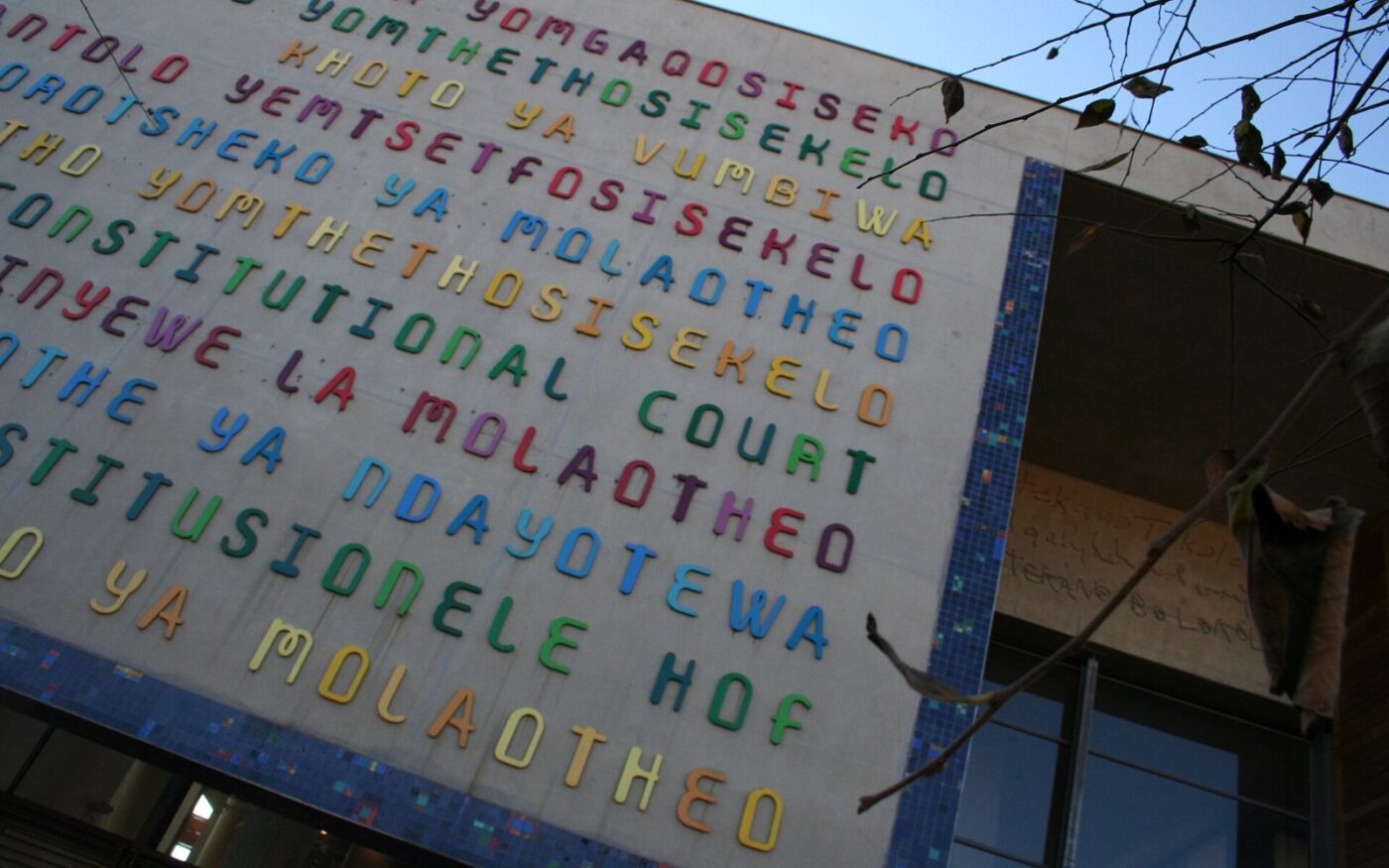
South Africa’s Constitutional Court has put 181 African National Congress (ANC) candidates back on the ballot for the November 4 local government elections. The ruling came on Thursday, October 15, 2026, less than three weeks before polling day. The candidates had been excluded because the party did not finalise its candidate lists on the Electoral Commission’s online system before the deadline. The decision forced the Electoral Commission of South Africa (IEC) to print 6.6 million extra ballot papers and reopen the process for dozens of smaller parties. It has also opened a sharp public dispute between the ANC and its main coalition partner, the Democratic Alliance (DA).
What happened
The ANC had uploaded its candidates’ details to the IEC’s online nomination system before the deadline of August 28, but it did not press the system’s “submit as final” button. Its lists in six municipalities were treated as incomplete. The municipalities are Sundays River Valley, Walter Sisulu, Ngquza Hill and Port St Johns in the Eastern Cape, uMshwathi in KwaZulu-Natal, and Mangaung metro in the Free State. The Electoral Court sided with the IEC in September. The ANC then went to the Constitutional Court.
According to Eyewitness News, a majority of the court granted the ANC leave to appeal, set aside the Electoral Court’s order and directed the IEC to “do all things necessary to include the party lists and ward candidate nominations”. Justices Basson and Savage would have dismissed the application. Full written reasons will follow. BusinessDay reported that the ANC argued its candidates had been removed under a rule not found in the Municipal Electoral Act or its regulations. IEC chairperson Mosotho Moepya said afterwards: “The court said we did not apply the law properly.”
The IEC’s response
On Friday, October 16, Moepya briefed the media in Pretoria. According to the government news agency SAnews, the commission decided to extend the same relief to other parties in a similar position. Applying the ruling only to the ANC, he said, “would be irrational and offensive to the principle of parity of treatment”. The IEC found that 32 parties had nominated compliant candidates and paid deposits but not submitted final lists, and said they should be “deemed to have lawfully submitted their candidates”. It found that 13 other parties still did not qualify. EWN later reported that all 32 parties had confirmed they would take part.
The logistics are tight. About 27 million of the 33 million ballots needed had been printed by October 16. Printing had been held back in the six municipalities directly affected while the case was pending. Chief Electoral Officer Sy Mamabolo said he expected the extra 6.6 million ballots to be ready by October 30, and that the cost would be met from existing savings. Moepya said: “Our logistical preparations have been significantly affected,” EWN reported. The commission does not expect the election date to change.
Key facts
- Ruling date: Thursday, October 15, 2026 (Constitutional Court, majority decision).
- Election date: Local government elections on Wednesday, November 4, 2026.
- Candidates restored: 181 ANC candidates (51 ward and 130 proportional representation) in six municipalities.
- Knock-on effect: 32 other parties given the same relief; 13 remain excluded.
- Ballots: 6.6 million additional papers on top of about 27 million already printed; target completion October 30.
- Still excluded: BusinessDay reported that 2,093 candidates from 44 parties had been left off for similar or other reasons; the court order itself applied only to the ANC.
Political fallout
The DA had opposed the ANC in both courts and had already named mayoral candidates in four of the affected municipalities. Helen Zille, the DA’s candidate for mayor of Johannesburg, told eNCA that from the outside “it appears as if the rules do not apply to the ANC”. She added that “we live in a Constitutional democracy and we will abide.” ANC secretary-general Fikile Mbalula hit back. He said the DA’s attempt to keep the ANC off the ballot amounted to trying to disenfranchise voters, and called for the DA’s “position in the coalition to be reviewed”, EWN reported. DA federal council chairperson Ashor Sarupen replied that “The DA is not in the GNU to go along to get along.”
Background
The ANC lost its outright parliamentary majority in the 2024 national election for the first time since 1994. It then formed a Government of National Unity (GNU) with the DA and several smaller parties. The November municipal elections are the first nationwide test of party support since then. Local councils in many areas are fragile coalitions, and service delivery is a constant source of public anger.
Perspective: what it means
This section is analysis.
Voters versus procedure. The core legal question is how strictly an administrative step should be enforced when the cost is keeping a major party off the ballot. The majority appears to have decided that the IEC’s rule was not supported by the law. The IEC’s choice to give the same relief to 32 other parties limits the charge that one party got special treatment. It does not settle the case of the many other candidates who never went to court.
Pressure on the IEC. Reprinting ballots and reopening nominations two to three weeks before an election is risky. Any printing delay, distribution error or court challenge in the affected councils would quickly become a story about the credibility of the election. The IEC’s reputation for competence is one of South Africa’s democratic strengths, and this election will test it.
A strained coalition. The row also shows how much tension the GNU is carrying. An ANC call to “review” the DA’s place in government, weeks before a local poll in which the two parties are rivals, is partly campaign rhetoric. But it suggests the partnership will face a harder test after November 4, when local results reshape the bargaining power in Pretoria.
What to watch. Whether the extra ballots are delivered by October 30, the court’s written reasons, and whether other excluded candidates now go to court.
Sources
- SAnews (South African Government News Agency) — IEC gives similarly affected political parties relief after Constitutional Court ruling
- Eyewitness News — ANC wins battle against IEC over candidates lists debacle
- BusinessDay — ANC wins ConCourt battle with IEC but 2,093 other candidates remain excluded
- Eyewitness News — IEC says logistical preparations dented following ConCourt ruling
- Eyewitness News — IEC racing to print 6.6m extra ballot papers
- eNCA — ConCourt judgment makes no sense: Zille
- Eyewitness News — Mbalula calls for GNU review following ConCourt election candidate victory