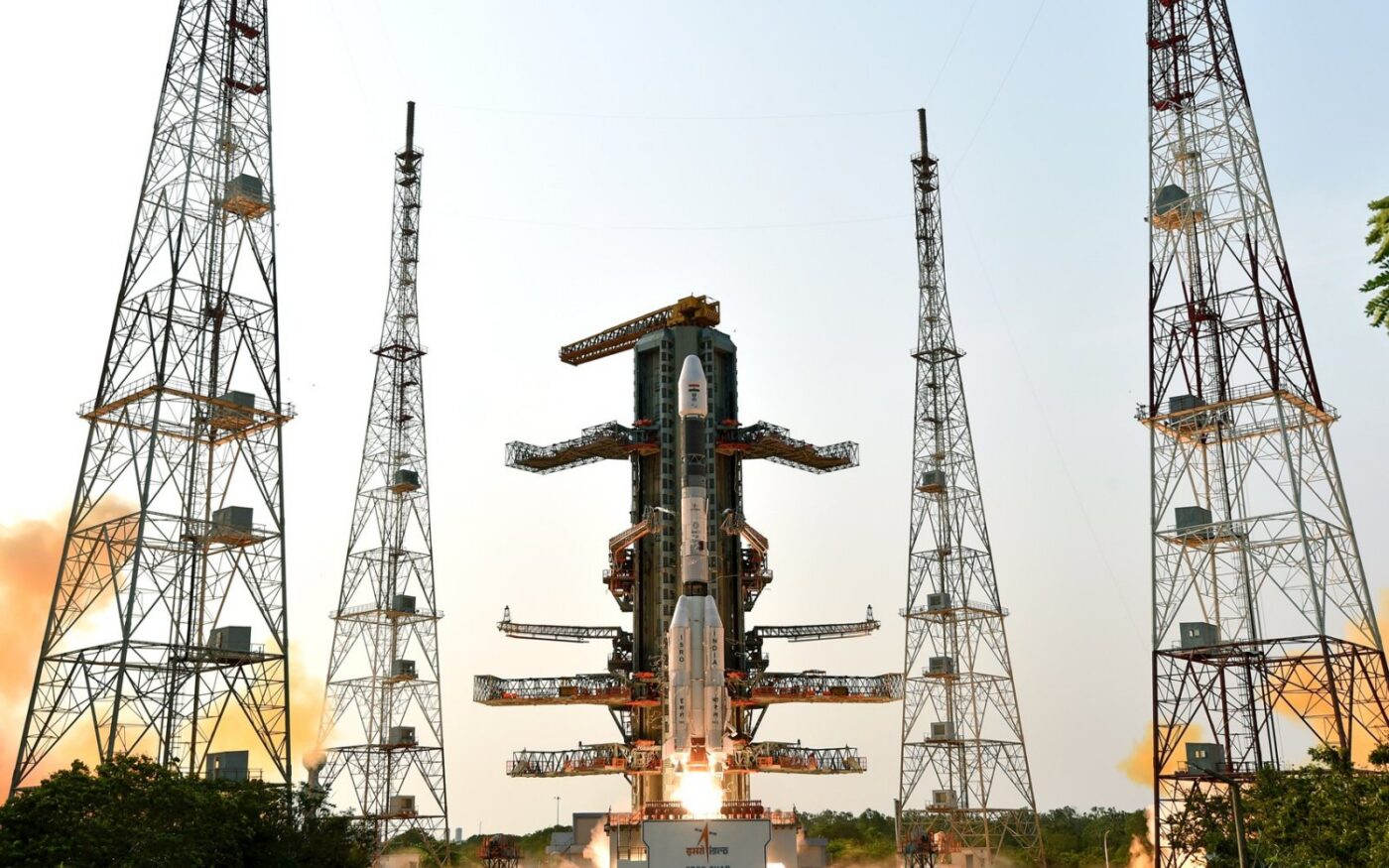
The Indian Space Research Organisation (ISRO) has published the mission details for GSLV-F18, the flight that is meant to carry the NVS-03 navigation satellite from Sriharikota and bring India’s home-grown NavIC system back to a working constellation. ISRO’s mission page went up on October 28, 2026, and reports citing ISRO officials put the launch on October 30, 2026, at 11:51 pm IST. The stakes are unusually high: NavIC currently has only three satellites providing navigation signals, one short of the minimum needed for independent positioning.
What happened
According to ISRO’s mission page and the mission brochure dated October 27, GSLV-F18 will be the 20th flight of the Geosynchronous Satellite Launch Vehicle and will lift off from the Second Launch Pad at the Satish Dhawan Space Centre. The rocket is to place the roughly 2,250 kg satellite into a geosynchronous transfer orbit of about 170 km by 37,023 km, inclined at 20.75 degrees. From there, the satellite’s own engine must raise it to its final operating orbit before it can join the constellation.
ISRO’s own pages did not list a launch time at the time of writing. GPS World, citing India Today, quoted an ISRO official as saying: “Most probably, we will be able to launch NVS-03 on October 30.” The flight had earlier been expected in mid-October, as The Week reported in September, so the date has already slipped once and could move again.
Background: why NavIC needs a fourth satellite
NavIC (Navigation with Indian Constellation, formerly IRNSS) is India’s regional satellite navigation system, covering the country and a band of about 1,500 km beyond its borders. It offers an open service for civilian users and an encrypted restricted service for authorised users such as the armed forces.
A receiver needs signals from at least four satellites to solve for its three-dimensional position plus its own clock error. NavIC has been stuck below that threshold. DT Next, drawing on figures given to Parliament, reported that 11 NavIC satellites have been launched, of which only three can broadcast navigation signals while five provide one-way messaging. Ageing atomic clocks are a major reason; the same report notes that IRNSS-1F lost its last working rubidium clock after completing its ten-year design life. The Week lists the three working navigation satellites as IRNSS-1B, IRNSS-1I and NVS-01.
The second-generation replacement series has had a rocky start. NVS-01 reached orbit in May 2023, but NVS-02, launched on January 29, 2025, was stranded in its transfer orbit. ISRO’s failure analysis found that the command to fire a pyro valve on the oxidiser line of the orbit-raising engine never arrived, most likely because a connector contact disengaged in both the main and redundant paths. ISRO says the corrective measures were applied on later missions, beginning with CMS-03 in November 2025.
The GSLV itself returned to flight on September 4, 2026, when GSLV-F17 placed EOS-05 in its intended orbit.
Key facts
- Mission: GSLV-F18, the 20th GSLV flight, from the Second Launch Pad, Sriharikota.
- Reported launch: October 30, 2026, 11:51 pm IST (per reports citing ISRO officials; subject to change).
- Rocket: about 50 m tall, about 420 tonnes at liftoff, three stages including the indigenous CUS15 cryogenic upper stage.
- Satellite: NVS-03, about 2,250 kg, third of five planned second-generation NavIC satellites.
- Payload: an indigenous atomic clock alongside procured clocks; adds an L1 signal to NavIC’s existing L5 and S-band signals.
- Target orbit after launch: geosynchronous transfer orbit, about 170 km x 37,023 km, 20.75 degrees inclination.
- Constellation today: three satellites providing navigation services; four are needed for standalone positioning.
Perspective: why it matters
For India, NavIC is less about convenience than control. Military planners have long pointed to the Kargil conflict of 1999 as the moment the risks of depending on a foreign navigation system became clear, and precision weapons, aircraft and ships all depend on reliable positioning and timing. A constellation that cannot deliver a standalone fix forces users back onto GPS and other foreign systems, which is exactly the dependency NavIC was built to remove.
The new L1 signal also matters for ordinary users. L1 is the frequency band that mainstream GPS chips already listen to, so adding it makes it far easier for phones, wearables and vehicle trackers to use NavIC without specialised hardware. That has been a sticking point in the government’s push for NavIC support in consumer devices.
Two caveats are worth keeping in mind. First, a successful launch is only step one: the satellite must still complete orbit raising, the very phase that failed on NVS-02, before it can broadcast. Second, one satellite only lifts the system to the bare minimum. Robust service with margin for further clock failures depends on NVS-04 and NVS-05, which the government told Parliament in July are in advanced development. A clean NVS-03 mission would restore NavIC’s footing, but the constellation will stay fragile until those follow-on satellites are in orbit.
Sources
- ISRO — GSLV-F18/NVS-03 Mission
- ISRO — GSLV-F18/NVS-03 mission brochure (PDF)
- ISRO — NVS-02 Spacecraft: On-Orbit Observations and Apex Committee Recommendations
- ISRO — GSLV-F17/EOS-05 Mission
- GPS World — India to launch NVS-03 satellite to bolster NavIC
- The Week — NVS-03: Why India’s armed forces eagerly await this navigation satellite from ISRO
- DT Next — ISRO plans NavIC revival with NVS-03 launch in October
- UNI — ISRO NavIC satellite launch mission