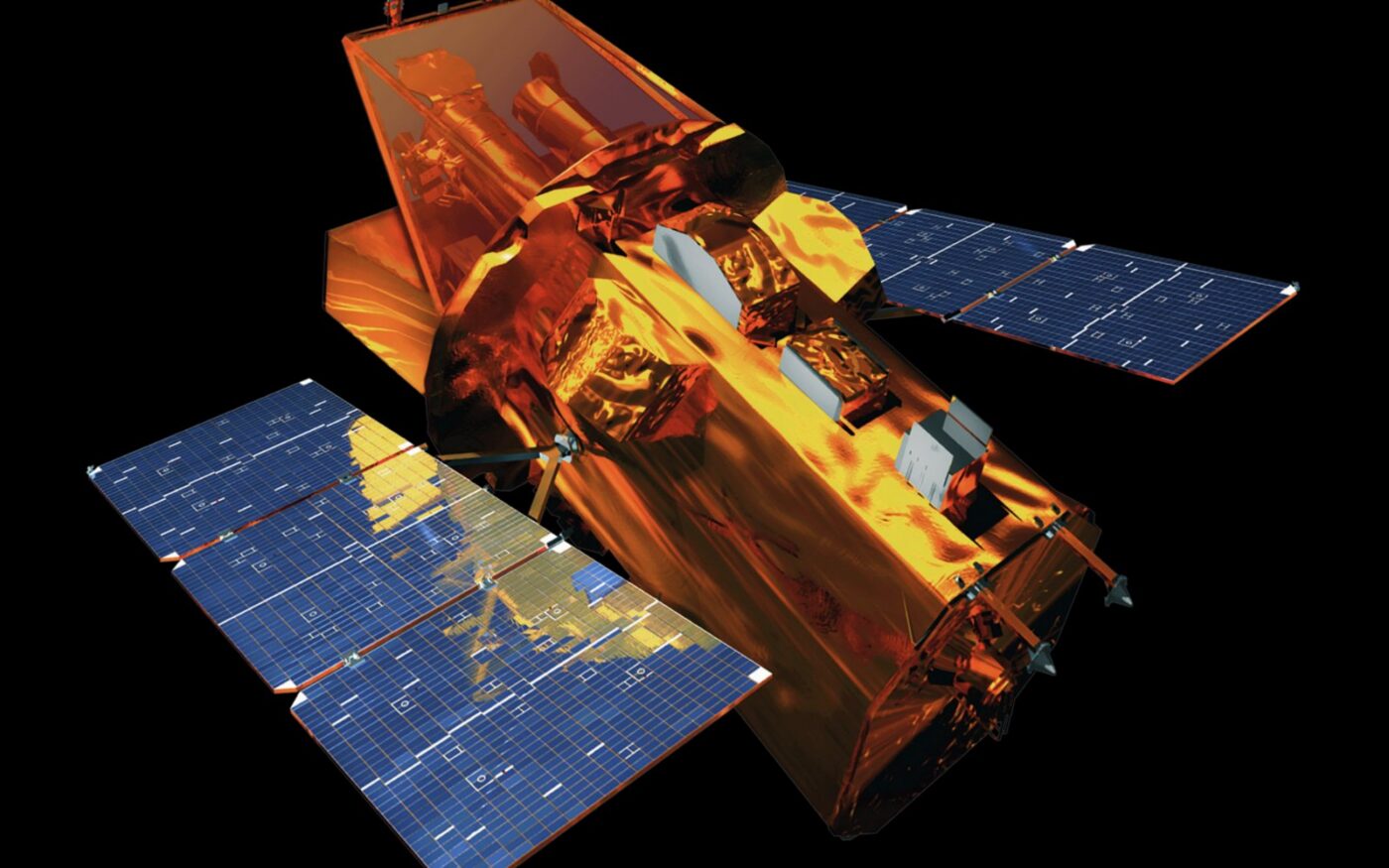
NASA has ended the science mission of the Neil Gehrels Swift Observatory, the satellite that spent nearly 22 years chasing the most violent explosions in the universe. The agency announced on October 23, 2026 that Swift had concluded operations after its orbit decayed to the point where it could no longer point its telescopes steadily. Swift made its final observation on October 20 and is expected to fall back into Earth’s atmosphere within weeks, after a privately built rescue spacecraft failed earlier this year.
What happened
Every satellite in low Earth orbit is slowly dragged down by the thin upper atmosphere, and that drag grows stronger when the Sun is active and heats and expands the atmosphere. NASA said heightened solar activity caused Swift to sink rapidly. On October 20 the spacecraft reached an altitude of about 275 km (171 miles), where it could no longer counter the extra drag, and it entered safe mode. The operations team at Penn State then sent a command that effectively ended operations and readied the spacecraft for re-entry, according to NASA’s mission blog. NASA has not given a specific re-entry date.
The end came after a summer in which the team had tried to buy time. NASA had paused observations and repositioned the telescope to reduce drag while it waited for a boost mission. When that effort was abandoned, Swift resumed science in late August and observed hundreds more targets, including supernova remnants, active supermassive black holes and comets, but the resumed manoeuvring increased drag again and hastened its descent.
Background: the rescue that did not happen
In 2025 NASA contracted Katalyst Space Technologies to build a robotic spacecraft that would grab Swift and push it into a higher, longer-lived orbit, giving the company roughly nine months to develop it, Science News reported. The spacecraft, called Link, launched on July 3, 2026. The Associated Press reported that the $30 million effort ran into electronics problems that disabled two of its three reaction wheels, and a faulty valve then sent it into a fast spin. Engineers regained control, but too little fuel remained to capture Swift, and NASA and Katalyst called off the rescue on August 19. Link itself re-entered the atmosphere in late September.
Katalyst chief executive Ghonhee Lee told the AP that the company had known it was attempting an ambitious mission on an aggressive timeline, adding, “This is a foundation we can build on.”
Key facts
- Launched: November 20, 2004, on a planned two-year primary mission; it operated more than ten times longer.
- Final observation: October 20, 2026, at about 275 km altitude; end of mission announced October 23.
- Gamma-ray bursts: more than 2,000 observed.
- Supernovae: more than 1,400 studied.
- Research output: data used in about 7,000 published papers.
- Archive: about 22 years of data, including more than 1.5 million ultraviolet/optical images, totalling roughly 12 terabytes, which remains public.
- Name: renamed in 2018 for Neil Gehrels, its first principal investigator.
What Swift achieved
Swift was built for speed. Gamma-ray bursts, flashes produced by collapsing massive stars or merging neutron stars, can fade within seconds, so Swift was designed to spot a burst, swing its X-ray and optical telescopes toward it within minutes and alert observatories around the world. In May 2005 it caught the first afterglow ever detected from a short gamma-ray burst, a 0.03-second event, by turning quickly enough to collect 11 X-ray photons. Its flexible scheduling, handling up to 75 targets a day, also made it a workhorse for studying black holes tearing apart stars, active galaxies, comets and asteroids. NASA astrophysics director Shawn Domagal-Goldman said: “Swift delivered an incredible, lasting return on investment for the nation.”
Perspective: why it matters
Swift’s loss leaves a real gap in what astronomers call time-domain and multi-messenger astronomy, the practice of catching fleeting cosmic events in many kinds of light, and increasingly in gravitational waves and neutrinos, at the same time. Few current spacecraft can combine wide-field detection with rapid, autonomous repointing. NASA says it will lean on existing missions and is exploring commercial and new options, but no direct replacement is in orbit.
The episode also offers a sober lesson about orbital servicing. Robotic rescue and life-extension of satellites is a fast-growing commercial idea, and NASA’s willingness to try a quick, high-risk mission was notable. Its failure shows how hard rendezvous and capture remain on compressed timelines. For space agencies everywhere, including India’s, which operates its own science satellites in low orbits, Swift is a reminder that solar cycles can shorten a mission’s life, and that planning for re-boost or graceful decline is worth doing long before the end is in sight.
Sources
- NASA — NASA’s Swift Mission Ends, Leaves Behind Scientific Bonanza
- NASA — NASA’s Swift Mission Ends Ahead of Re-Entry
- AP via NY1 — Private spacecraft falls back to Earth after failing to rescue aging NASA telescope
- Science News — A space telescope was falling from orbit. Its rescue mission fell apart too