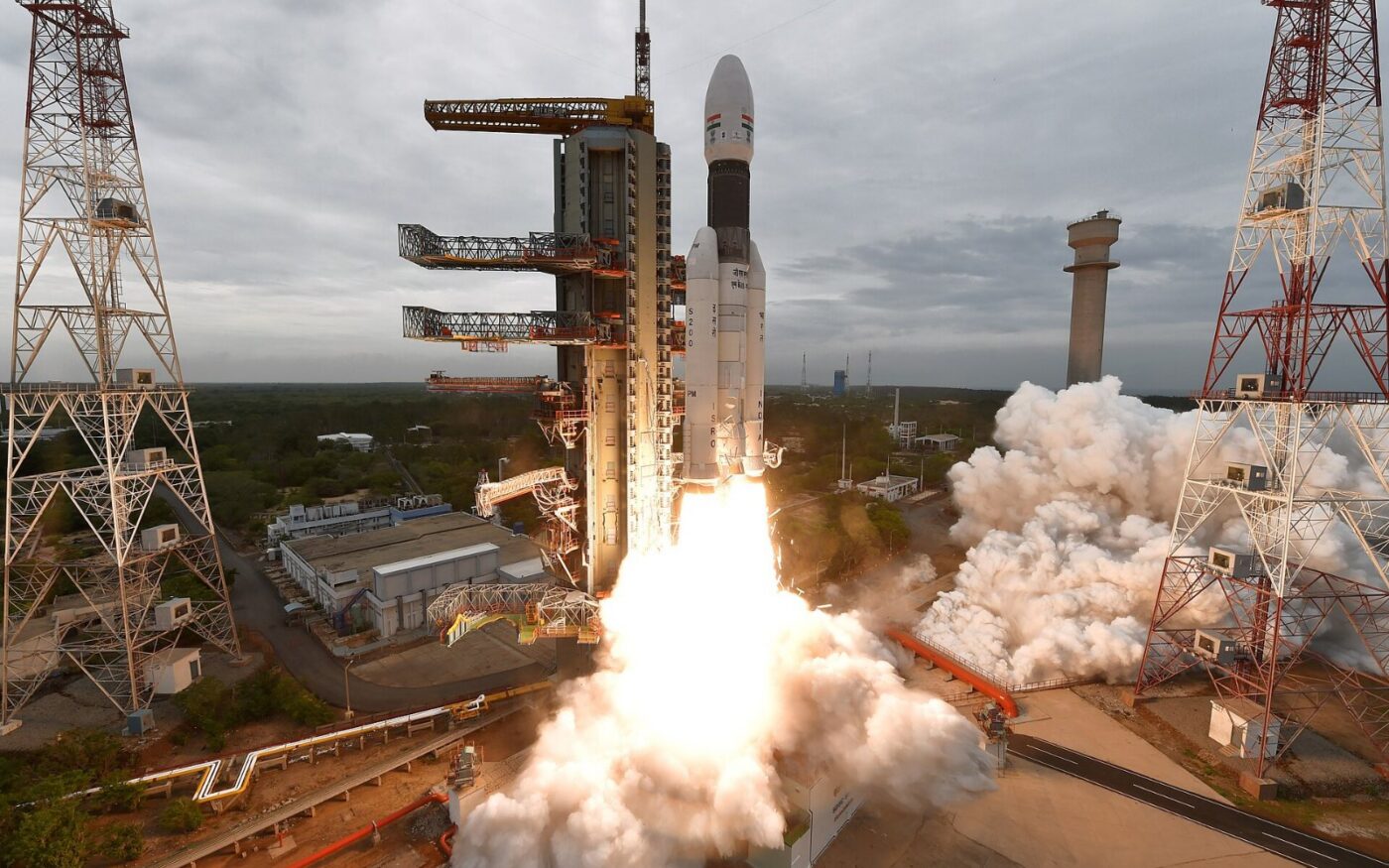
India’s first uncrewed Gaganyaan orbital flight, known as G1, appears to be entering its final stretch. On October 16, 2026, the Indian Space Research Organisation (ISRO) said it had completed tests of the system that separates the Gaganyaan crew module from its service module before re-entry, and on October 24 ISRO Chairman V. Narayanan told reporters in Chennai that the test flight was expected in about two months, according to UNI. If that holds, the mission would lift off from Sriharikota in Andhra Pradesh around the end of December 2026.
What happened
The separation tests were carried out at the Vikram Sarabhai Space Centre (VSSC) in Thiruvananthapuram, Kerala. During a Gaganyaan flight, the crew module — the capsule that would one day carry astronauts — and the service module, which supplies propulsion and power, travel as a single unit until the end of the orbital phase. Before re-entry, they are split apart by a carefully timed sequence of pyrotechnic and jettison events, which also severs several umbilical connections between them.
ISRO said it built a heavily instrumented test setup that simulated the full crew-module and service-module assembly. According to the agency’s release, the campaign was designed to “validate the overall design adequacy of the separation system,” and also checked whether sensitive crew module systems could withstand the shock of separation. These included avionics, inertial navigation units, the aft and conical heat shields of the thermal protection system, a deployable umbilical shield, and the pyrotechnic devices linked to the uprighting and thermal-and-humidity control systems. ISRO said the results provide “necessary confidence” in the separation system ahead of G1.
Speaking after a graduation event at the Sri Ramachandra Centre for Higher Education and Research campus in Chennai on October 24, Narayanan said G1 would fly on the human-rated LVM3 rocket (HLVM3) and carry Vyommitra, a half-humanoid robot designed to stand in for an astronaut.
Key facts
- Mission: Gaganyaan-1 (G1), the first uncrewed orbital test of India’s human spaceflight spacecraft.
- Rocket and launch site: HLVM3, from the Satish Dhawan Space Centre, Sriharikota.
- Payload: The Vyommitra robot, which will help test conditions inside the crew module.
- Latest milestone: Crew module–service module separation tests at VSSC, announced October 16, 2026.
- Earlier 2026 tests: ISRO reported qualification tests in July covering the crew module uprighting system (which turns the capsule upright after splashdown), an umbilical separation unit and apex cover jettison, as All India Radio reported.
- Ultimate goal: A crewed flight carrying three astronauts to a roughly 400 km orbit for up to three days, followed by a splashdown in Indian waters, per Swarajya.
Background
The Gaganyaan programme was announced by Prime Minister Narendra Modi in 2018, with early hopes of a crewed launch by 2022. The pandemic, the complexity of human-rating a rocket, and extensive safety testing pushed the timeline back repeatedly; the first uncrewed flight itself has slipped several times from an original 2020–21 window. A key step came in October 2023, when ISRO flew the TV-D1 test vehicle to demonstrate the crew escape system. In February 2024 the government named four Indian Air Force officers as astronaut-designates, one of whom, Group Captain Shubhanshu Shukla, flew to the International Space Station on the Axiom-4 mission in 2025.
ISRO has said more uncrewed flights will follow G1 before astronauts are put on board, so the first crewed Gaganyaan mission is still some way off.
Perspective: what it means
This section is NewsHouse analysis.
Uncrewed test flights are where human spaceflight programmes prove they can bring a capsule home safely, and separation and re-entry are among the riskiest phases. A capsule that fails to separate cleanly, or whose heat shield is damaged by the shock, cannot survive re-entry. That makes the October tests more significant than their technical language suggests: they address one of the last major hardware questions before a full orbital rehearsal.
Still, schedules for G1 have shifted many times, and a “two months” estimate given to reporters is not a launch date. ISRO has also been balancing Gaganyaan with a busy launch manifest and with longer-term plans, including the proposed Bharatiya Antariksh Station. A successful G1 would give India a tested crew vehicle, an asset only a handful of countries have, and would sharply raise confidence in the crewed timeline. A delay into 2027 would not be unusual by global standards, where crew vehicles routinely run late. Either way, the outcome will be shaped largely by work at ISRO’s centres in Kerala, Tamil Nadu, Karnataka and Andhra Pradesh, which together form the backbone of India’s space industry.
Sources
- ISRO — ISRO successfully completes Crew Module-Service Module Separation Tests for Gaganyaan Programme
- UNI — Gaganyaan test flight: ISRO chief (October 24, 2026)
- Swarajya — India’s Gaganyaan programme crosses key milestone as ISRO validates crew module separation system
- Open Magazine — Gaganyaan Clears Module Separation Tests Ahead of First Uncrewed Mission
- All India Radio News — ISRO successfully carries out three major tests of Gaganyaan crew module systems (July 2026)