The Union Cabinet on Wednesday, October 28, 2026, approved the Container Manufacturing Promotion Scheme (CMPS), a ₹10,000 crore programme meant to build a domestic industry for the steel boxes that carry most of India’s trade. The scheme, first announced in the Union Budget 2026–27, will run until financial year 2039–40 and aims to raise India’s annual container-making capacity roughly tenfold, to about 7.5 lakh twenty-foot equivalent units (TEUs), according to the decision announced by Union Minister Ashwini Vaishnaw after the Cabinet meeting, as reported by UNI.
What happened
The Cabinet, chaired by Prime Minister Narendra Modi, cleared a support package with three main parts. The largest is operational expenditure assistance: a per-container payment to eligible manufacturers for boxes built to international shipping standards and actually sold. A second component offers interest subvention on loans taken to set up new (greenfield) plants or expand existing (brownfield) ones. A third funds testing and certification, including common facilities for demanding procedures such as dynamic longitudinal impact testing, which checks whether a container can survive the jolts of rail and port handling.
Officials said the scheme is intended to “build a globally competitive container manufacturing industry in India,” cut reliance on imports, and strengthen the resilience of maritime and logistics supply chains. The government also pitched it as a route to making India an exporter of containers, not only a buyer.
Key facts
- Total outlay: ₹10,000 crore, valid up to FY 2039–40.
- Operational expenditure assistance: ₹8,891 crore. Outlook Business reports the support at ₹49,500 per standard 20-foot container and ₹86,625 per 40-foot container, with ₹37,125–₹74,250 for specialised 20-foot units.
- Interest subvention: ₹859 crore, at 3% a year on eligible term loans.
- Testing and certification: ₹150 crore.
- Capacity goal: about 7.5 lakh TEUs a year, roughly ten times current output.
- Jobs: around 3,000 direct and more than 50,000 indirect, by the government’s estimate, including in ancillary trades such as corner castings, specialised steel, wooden flooring and paints.
- Local content: at least 70% until FY 2031–32, rising to 90% from FY 2032–33, per Outlook Business.
- Minimum plant size: 1,00,000 TEUs a year for greenfield projects and 25,000 TEUs for brownfield expansions; major ports may lease land to container units at 25% of the applicable rate, according to the same report.
The three published components add up to ₹9,900 crore; the reports reviewed by NewsHouse did not specify how the remaining ₹100 crore of the headline outlay will be used.
Background
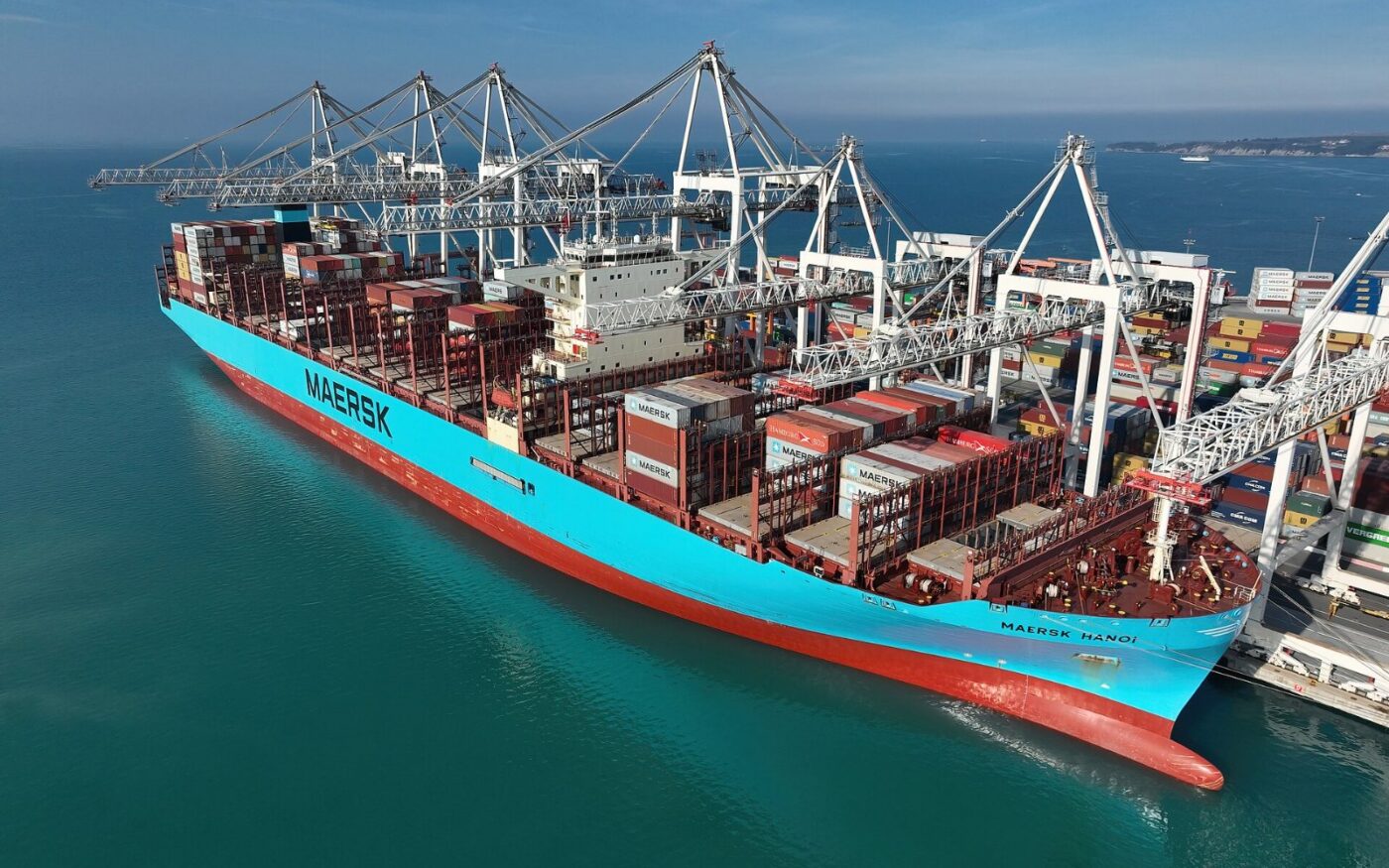
India’s ports and inland depots depend heavily on imported containers. A government backgrounder published by the Press Information Bureau in August 2026 said the country brings in nearly 2 million empty containers every year to meet domestic demand and for repositioning. Global container production is concentrated in China, which has left Indian exporters exposed whenever box shortages or freight-rate spikes hit, as they did during the pandemic.
The policy has been building for months. On July 3, 2026, Ports, Shipping and Waterways Minister Sarbananda Sonowal unveiled what the government described as the first Made-in-India EXIM (export-import) shipping container, produced for A.P. Moller–Maersk at the Maersk-CONCOR inland container depot in Dadri, Uttar Pradesh. According to the PIB release on that event, Maersk placed an order for 1,000 more India-made containers with the DCM Shriram Group, and the container was certified to ISO specifications and the International Convention for Safe Containers. The container scheme also sits alongside other maritime measures announced in recent months, including a large shipbuilding financial assistance package and plans for a national container shipping line.
Perspective: what it means
This section is NewsHouse analysis.
Containers are a low-glamour product, but they are a classic chokepoint. Whoever makes the boxes, and can make more of them quickly, has leverage over freight costs when trade surges. By paying a fixed sum per container sold, rather than only subsidising factory construction, the scheme ties public money to actual output — a design similar to India’s production-linked incentive (PLI) schemes in electronics and other sectors. That structure tends to reward manufacturers who reach scale, which matters in an industry where the established players compete on very thin margins.
The long horizon to 2039–40 and the rising local-content requirement signal that the government wants an entire supply chain, including specialised steel and castings, not just assembly yards. That is also the main risk: if domestic steel and components cost more than imported equivalents, Indian boxes may stay uncompetitive once incentives taper. The minimum plant sizes are meant to prevent subsidy money from being spread across too many small units.
Whether the tenfold target is met will depend on demand from shipping lines and leasing companies, not just on supply-side support. The Maersk order is an early signal of interest, but sustained global orders will be the real test. The scheme’s land-at-concessional-rent offer at major ports suggests the government expects clusters to form near coastal gateways, which could shorten the distance between the factory and the first export load.
Sources
- UNI — Cabinet clears Rs 10,000-cr scheme to boost domestic container manufacturing
- Outlook Business — Centre Outlays ₹10,000 Cr To Boost Container Manufacturing Capacity, Cut Import Dependence
- IANS via Social News XYZ — Cabinet approves Container Manufacturing Promotion Scheme for Rs 10,000 crore
- PIB (Ministry of Ports, Shipping and Waterways) — First Made-in-India EXIM shipping container unveiled for Maersk, 3 July 2026
- PIB — Backgrounder on container manufacturing support and maritime reforms (August 2026, PDF)