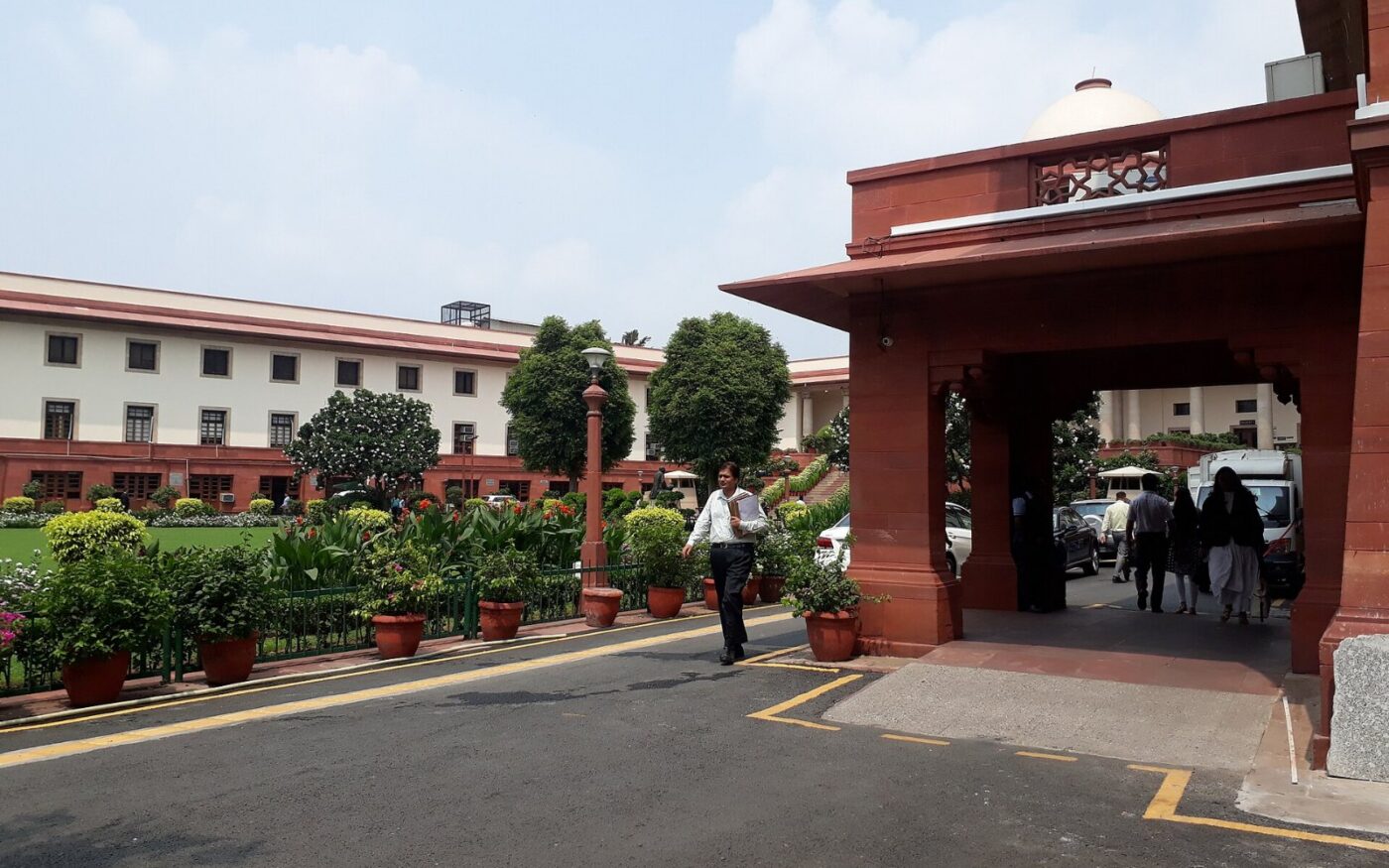
The Supreme Court of India held on October 15, 2026 that the right to access and use the internet is a fundamental right that belongs to children as much as to adults, and that protecting minors from online harm cannot be used to justify cutting them off altogether. In the same 136-page order, a bench of Justices J.B. Pardiwala and K. Vinod Chandran issued a detailed set of directions to the Centre and social media platforms to detect, remove and report child sexual exploitation and abuse material (CSEAM), after finding that little had changed since its landmark 2024 ruling on the subject.
What happened
The order came in applications filed by the NGO Just Rights for Children Alliance in the case Just Rights for Children Alliance v. S. Harish (reported as 2026 INSC 1149). The petitioners argued that intermediaries were still failing to tackle abuse material, citing reports of paid promotion of such content through redirect links. The court said there had been “no progress worth the name” in the two years since its September 2024 judgment, Bar & Bench reported.
Reading Article 21 (life and personal liberty) together with Article 19(1)(a) (freedom of speech and expression), the bench recognised internet access as a fundamental right for every individual, irrespective of age. It declined to endorse a blanket restriction on children’s use of social media. In a line widely quoted from the judgment, the court said: “The safety of our children and their freedom are not at odds with each other. Our children are entitled to both.” It added that keeping children offline because of failures by others “would be to mistake the victim for the problem.”
The judges did not rule out all age-based safeguards. According to The News Minute, the order points to parental consent and supervision, “child mode” accounts that are private by default, limits on contact from unknown adults, and moderated advertising and content. The government may still bar children from categories of inherently harmful material, such as adult websites. The court also flagged that verifying the age of every user could require collecting sensitive personal data and create surveillance risks.
Key facts
- Date and bench: October 15, 2026; Justices J.B. Pardiwala and K. Vinod Chandran.
- Constitutional basis: Article 21 read with Article 19(1)(a).
- National database: The Centre is to set up a National Hash and URL List Database for CSEAM, possibly built on the government’s Sahyog Portal. It will store digital fingerprints (hashes) and web addresses, not the material itself, and entries require verification by at least three trained human analysts.
- Takedown and reporting: Platforms must remove content matching the database, offer a dedicated CSEAM reporting option reachable within two steps, acknowledge complaints within 24 hours, and report material of unknown origin to police and the database authority within two hours in specified circumstances, per Verdictum.
- Penalties: The Centre should consider exemplary fines scaled to the gravity of the breach and the platform’s size, and revenue earned from paywalled abuse material should be forfeited.
- Schools: Digital safety and age-appropriate sex education are to become part of the core curriculum, developed by NCERT and state SCERTs, with teacher training, parent awareness programmes and free counselling for victims.
- Next hearing: December 10, 2026, by which the Centre must file a compliance affidavit.
Background
The case has a long history. In September 2024 the Supreme Court held that viewing, storing or possessing child sexual abuse material can be an offence under the POCSO Act and the IT Act, and that intermediaries who fail their reporting and due-diligence duties cannot claim “safe harbour” protection under Section 79 of the IT Act. In the October 2026 order, the court said losing safe harbour had proved too drastic and too remote a threat to deter routine failures, which is why it has now asked for graded fines and a shared technical infrastructure.
The judgment also addresses a gap in current rules: platforms act in isolation, so content removed by one service is not automatically flagged to others. A common hash-and-URL list is the standard tool used internationally to close that gap.
Perspective: what it means
This section is NewsHouse analysis.
The ruling arrives in the middle of a global argument about whether children should be on social media at all. Australia began enforcing a minimum age of 16 for major social platforms in December 2025, and similar proposals have been debated elsewhere. India’s top court has now taken a clearly different line: it treats children’s access to the internet as a right to be protected, and puts the burden of safety on platforms and on those who create or spread harmful material.
That framing will matter for policymakers. Any future law or rule that imposes a blanket age ban will have to be justified against a recognised fundamental right, which sets a high bar of proportionality. At the same time, the judgment leaves room for targeted measures such as child accounts and parental consent — an approach that fits with the Digital Personal Data Protection Act, 2023, which already requires verifiable parental consent before platforms process children’s data.
The practical test is implementation. Many of the directions — a national database, two-hour reporting, graded fines — need government guidelines and possibly amendments to the IT Rules. The court’s own observation that two years passed with little progress shows how easily such directions can stall. The December 10 hearing will show whether the Centre and platforms have moved from intent to systems.
Sources
- Bar & Bench — Children too have fundamental right to access internet; can’t deny it citing online harm: Supreme Court
- Verdictum — All Individuals Including Children Have Fundamental Right To Access Internet: Supreme Court Disapproves Blanket Restrictions (2026 INSC 1149)
- The News Minute — Supreme Court calls internet access a fundamental right for children, rejects blanket ban
- Onmanorama — Children have fundamental right to internet access, blanket ban unjustified: SC
- Verdictum — Weekly Overview: Supreme Court Judgments, October 12–16, 2026